Showing posts with label Week 10. Show all posts

Friday, 27 July 2018

Week 10 - Forefront Friday: The Artwork of Walid K-Perrussel

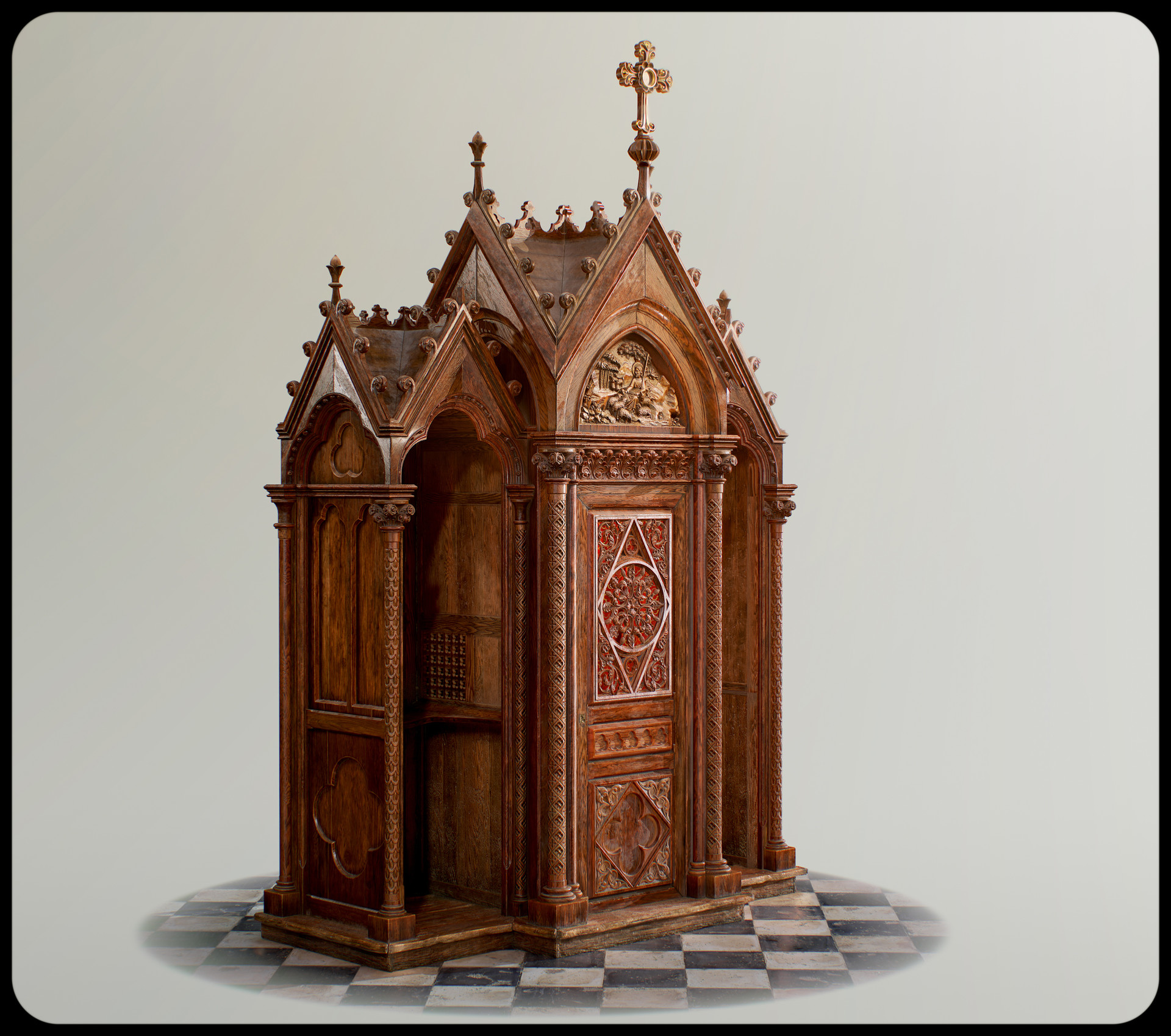
This week I have been studying the artwork of environment and prop artist Walid K-Perrussel. I was browsing Artstation looking for inspiration when his highly detailed model of a gothic confessional caught my attention.

https://cdna.artstation.com/p/assets/images/images/011/732/852/large/walid-k-perrussel-theconfessionnal-full.jpg?1531132821
K-PERRUSSEL, W. (2018), Gothic Confessional. [Online Image]. Available at: https://www.artstation.com/artwork/Jxz6R [Accessed: 27/07/2018].

I identify this piece of art at the forefront of the industry because Walid has employed an array of the best tools used for texture creation to achieve a level of quality and realism with this asset. Walid has stated that he used a combination of Substance Designer and Painter as well as Megascans to create the wood textures for the model. The results are incredibly realistic and as someone who has been trying to create similar wood carved assets for my major project, I can see the obvious difference in quality between us as artists.
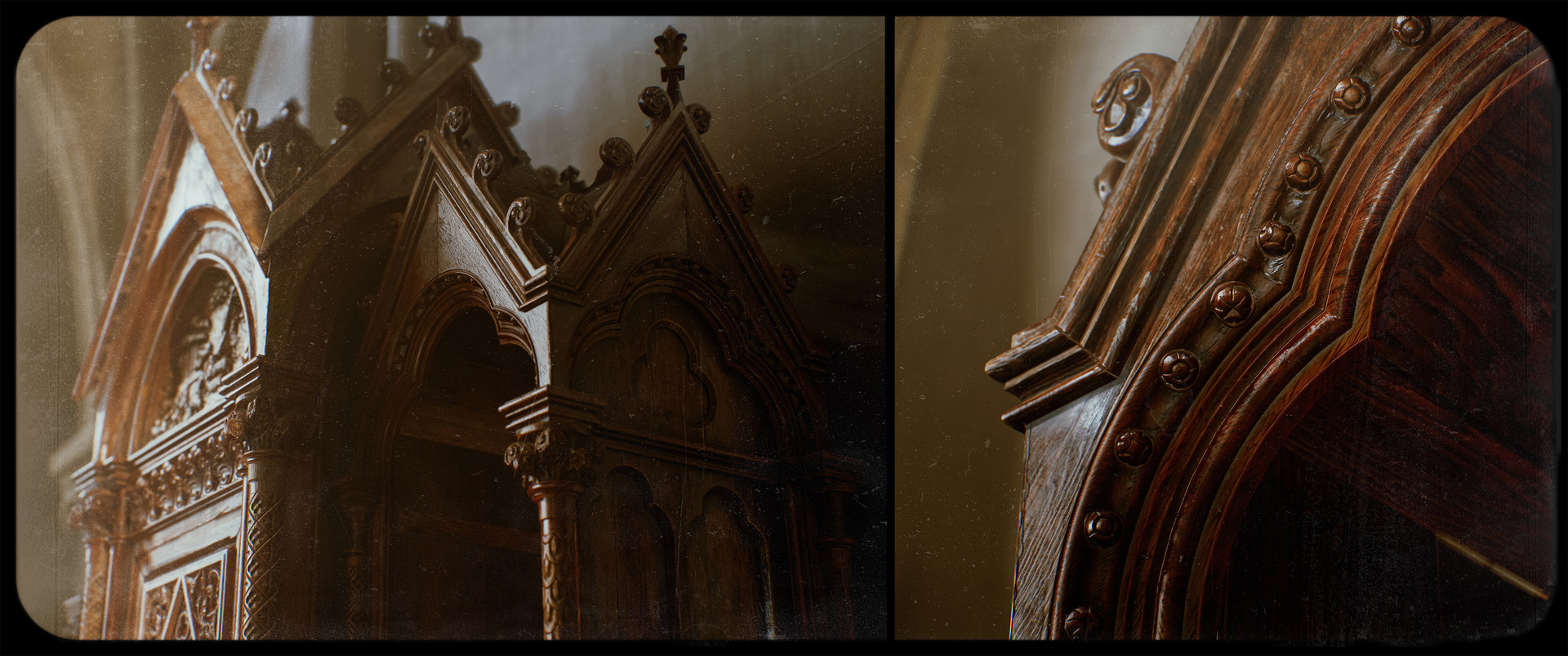
https://cdna.artstation.com/p/assets/images/images/011/738/262/large/walid-k-perrussel-theconfessionnal-angle-2.jpg?1531154486
K-PERRUSSEL, W. (2018), Gothic Confessional. [Online Image]. Available at: https://www.artstation.com/artwork/Jxz6R [Accessed: 27/07/2018].

One thing that I found interesting, was that Walid had used 3DS Max to create the ornate high poly details of the model, as opposed to sculpting them in ZBrush. This is reassuring information to me as I create my high poly details in much the same way, by subdividing the geometry and adding smooth modifiers to them in 3DS Max. I have often worried that if I didn't use ZBrush to create high poly detail then I would be less competitive from an employability standpoint. It's a relief to know that using Max as an alternative is still viable amongst professionals.
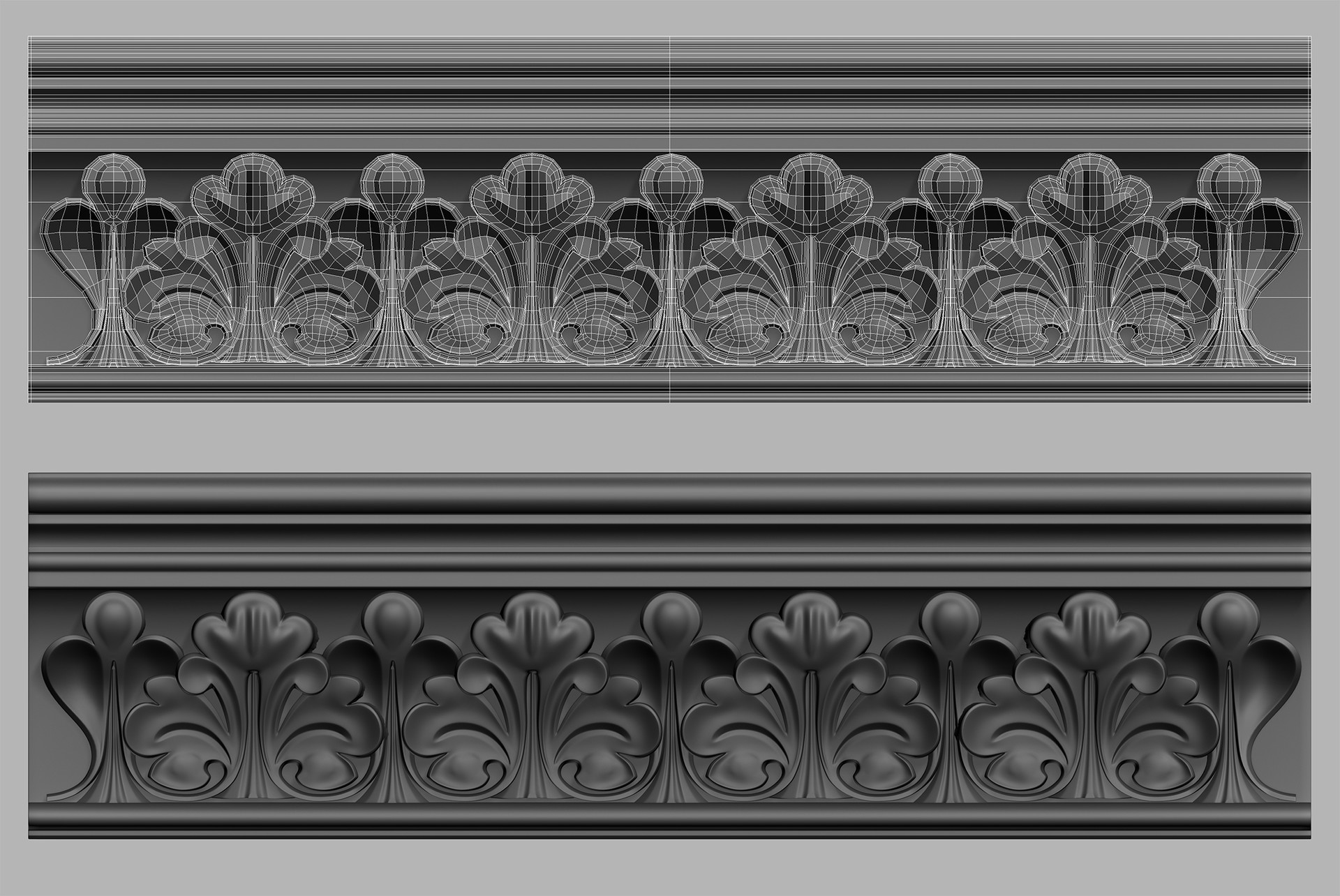
 https://cdnb.artstation.com/p/assets/images/images/011/741/289/large/walid-k-perrussel-ornement-trimt.jpg?1531166706
K-PERRUSSEL, W. (2018), Sub-D Ornate: Gothic Confessional. [Online Image]. Available at: https://www.artstation.com/artwork/Jxz6R [Accessed: 27/07/2018].

This piece was a bit of an eye opener for me because the texture work Walid has displayed looks so realistic. The wood grain in particular is very life like when compared to the wood texture I made using Substance Painter. I would like to start investing time into learning to use Megascans, as it is clear that it produces photo-realistic results.

Thursday, 26 July 2018

Week 10 - Thursday: Foliage Decal Experimentation

Today I have been creating decals designed to replicate the intricate vines growing on buildings like this:

https://blogger.googleusercontent.com/img/b/R29vZ2xl/AVvXsEg-gdPVdJriNQnz8wISZ3SipEjbs5Fg7E0i9lHcnzbbi8WJAP_BrWLRYjpFCpmHkbezAGKYUGH8wCwIayx-A31lc71I_Ua75TbbkeIi_-jwcqJjB1P4nNQ-pzNJQUE7JlNPw_DiGa7nmhA/s1600/building_vines.jpg
 Vines ensnaring a house.

Here is vine decal I created based on the image above.

A vine decal for use in Unreal Engine.

I created a 3D model and baked it onto a flat surface plane in Substance Painter:

The vine created in 3D.


The 3D vine on the plane ready to be baked into a texture.

Below you can see a larger surface area created using the same technique:

A larger vine texture I created to go on the front of the house.

The vine decal has an alpha mask to blend it into the wall. You can see what it looks like within the scene below:

Pasting the vine decal into the Unreal Engine scene. I can move it over any surface.

I am trying to layer the scene with various decals so I can really make it look like it is overgrown.

The vines ensnaring the walls of the entrance hall.

I think it's going to be really important to bring foliage into the interior. These decals are my first step to bringing in the more naturalistic elements from outdoors.

NORTHAN, C. (2012), I also can't get enough of when vines take over buildings: [Online Image]. Available at: http://verveevolving.blogspot.com/2012/04/naturally.html [Accessed: 26/07/2018].

Wednesday, 25 July 2018

Week 10 - Wednesday: Tutorial Session

Hofstadter's law is a self-referential time-related adage, coined by Douglas Hofstadter and named after him. Hofstadter's Law: "It always takes longer than you expect, even when you take into account Hofstadter's Law". In relation to my major project this means that even factoring in my additional contingency time on my schedule, certain tasks are going to run beyond my allotted time frames.

The last week of my project plan. Week eleven will be the last week I will spend on project development.

I am aiming to have all the development work of my major project complete by the end of week eleven. However factoring in Hofstadter's law, I have decided to spend the last week polishing what I already have in my environment as opposed to creating any new major assets.

During my tutorial session I was introduced to the concept of "triage" which is a medical term used to assign degrees of urgency towards patients with wounds or illnesses to decide the treatment order of a large number of patients or casualties. Whilst grim, the concept is quite helpful in determining what areas of my project I should spend my remaining time working on. I was demonstrated vividly that if something couldn't be salvaged then it was optimal to let it go and work on something that was achievable. With this in mind I will be aiming to perfect the debris and finish adding foliage to my environment. I have been using elements such as grass and trees from the Unreal Engine "Open World Demo" as these are high quality vegetation assets that have saved me a great deal of time that I haven't had to model myself.

As these foliage elements are not the focus of the environment and I am not gearing my portfolio toward naturalistic objects, I feel it will be acceptable to use them as window dressing to flesh out the mansion environment. Doing this should save me time and enable me to meet the deadline I have set myself for week eleven.

HOFSTADTER, D. (1979) Godel, Escher, Bach: An Eternal Golden Braid, 20th anniversary ed. New York: Basic Books.

Tuesday, 24 July 2018

Week 10 - Tuesday: Additional Rooms

I have been creating additional rooms to flesh out the mansion environment that should create the illusion that the level is much larger than it actually is. I have done this by creating a long corridor that branches off from the main entrance hall and opens up into a larger space. When viewed from the stairway it creates a nice sense of scale.

The hallway viewed from the staircase.

Using my established criteria for defining interior space, I have tried to use the boundaries of this hallway to constrain the players movements, locking them in one direction as they proceed down the long corridor. I think this creates a sense of foreboding and I am looking forward to reflecting this in my promotional video, as I want the camera to glide slowly down the hallway as the music intensifies.

The hallway corridor which will be bridging the entrance hall and sitting room together.
 
The hallway has been constructed of smaller components that I will be repeating within Unreal Engine. I created these curtains with the intention that they could be seen from the exterior as well, hinting that the player can explore in that direction.

Modular curtains and windows.

I want to simulate light beams being projected through the curtains as I think this will further illustrate the time of day and make the player feel the heat and stuffiness of the building.

Here are my curtains textured within Substance Painter. I sneakily reused my wallpaper texture and recoloured it red.

The curtains themselves were created using the cloth simulation similar to my carpet model. I have kept them quite low poly.

BARNWELL, J. (2017) Production Design for Screen: Visual Storytelling in Film and Television. New York: Bloomsbury Visual Arts.

Monday, 23 July 2018

Week 10 - Monday: Small Chair

As I draw closer to the end of my degree, I have been researching ways that I can make my portfolio stand out and be more marketable to employers. I found an article on Artstation interviewing industry veteran Robert Hodri, who is currently the senior environment artist at id Software. In the interview he highlighted what to focus on when building a game-centric portfolio.

"At the beginning of your career, you normally won’t be working on a whole level or environment where you have to do everything on your own. At least that’s how it is when you’re working on bigger AAA games. Usually you’re assigned to work on smaller props. That’s why I think it’s important to have at least a couple of high quality props and textures in your portfolio. That can be anything from crates, rocks to weapons and vehicles. Just show that you can create good game art and are familiar with the whole process. Making high poly meshes and baking them down on a low poly is something that every 3D artist needs to know and your portfolio should show that." - Robert Hodri, Senior Environment Artist at id Software.

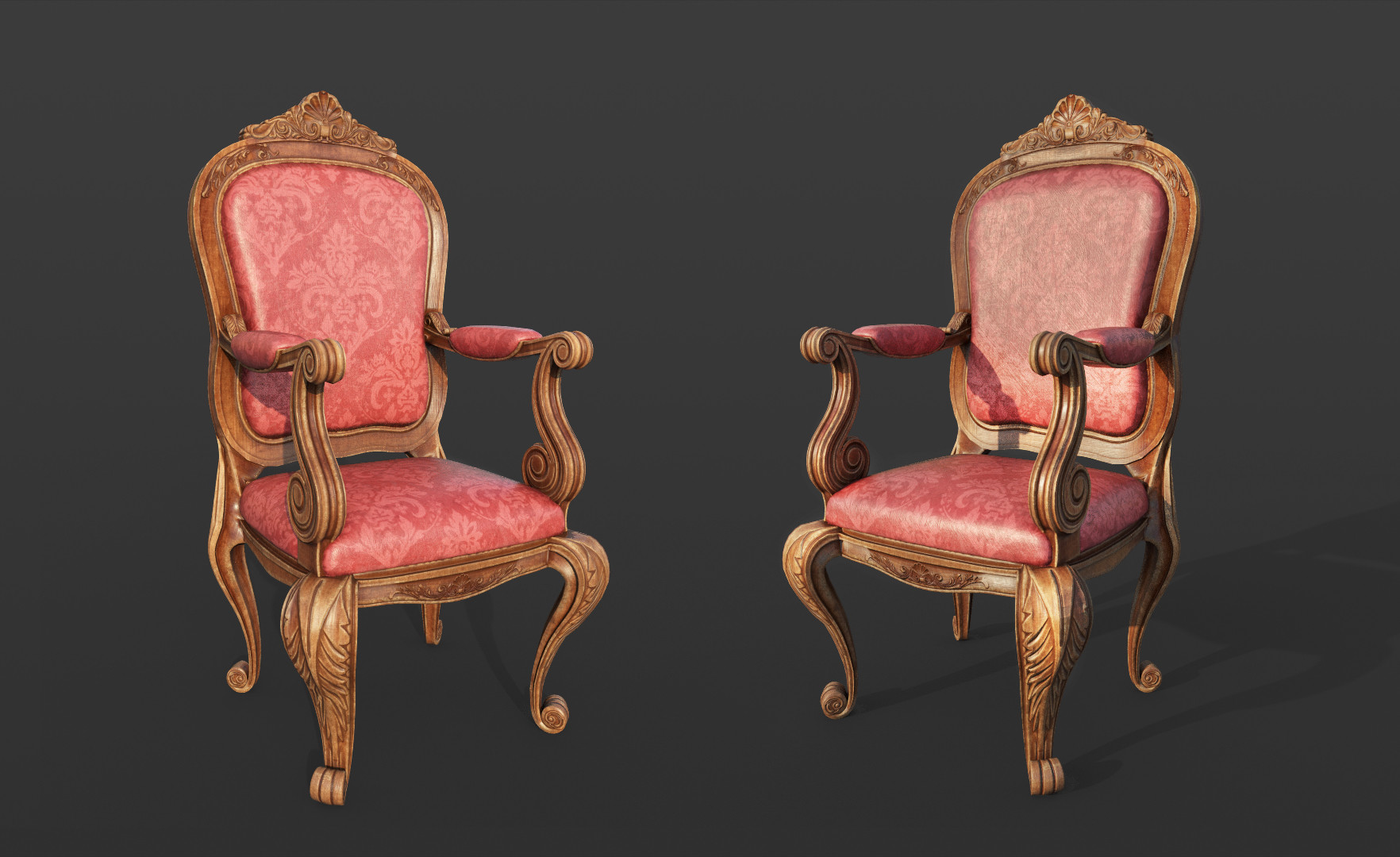
With this statement in mind I have been creating some more props that I will be displaying in my portfolio. I have been trying to find a balance between giving the model a nice silhouette and keeping it low poly. As such this asset is a lot more expensive than the previous armchair I had created. Currently the mesh sits at around 9k triangles. I can reduce the mesh further so that it is less expensive in-game, but right now I feel getting a strong portfolio piece is of greater importance.


My new chair props that I have put in my portfolio.

I now have two distinct chair assets in my portfolio showing that I can create props in different styles if needed. I based this model off of this Italian Baroque chair as I felt it would provide me with a good challenge:

A 19th Century Italian Baroque Chair that I used as reference.

I am going to continue tailoring my Artstation page to what triple AAA studios are looking for, as I feel these will be where the most employment opportunities are coming from.

ESCH, N. (2018), One 19th Century Italian Baroque Chair in Peacock Blue [Online Image]. Available at: https://www.monc13.com/products/one-19th-century-italian-baroque-chair-in-peacock-blue-furniture-seating [Accessed: 23/07/2018].

MON, S. (2017) Everything You Need to Know to Become a Game Environment Artist. [Online] Available from: https://magazine.artstation.com/2017/03/game-environment-artist/ [Accessed: 23/07/2018]